At some point, growth stops feeling simple. We start out handling legal things as they come. A contract shows up… we send it out for review. A question about hiring pops up… we ask an attorney. Nothing overwhelming. Nothing urgent.
But then things change… more clients, bigger deals & new partnerships. Maybe even new regions. And suddenly, legal questions are not occasional anymore. They are constant. They show up in meetings, emails, and decisions we did not expect to feel so heavy. That is usually when we stop and ask ourselves… should we hire an in-house lawyer, or keep working with outside counsel? Let us break it down honestly.
What Is In-House Counsel?
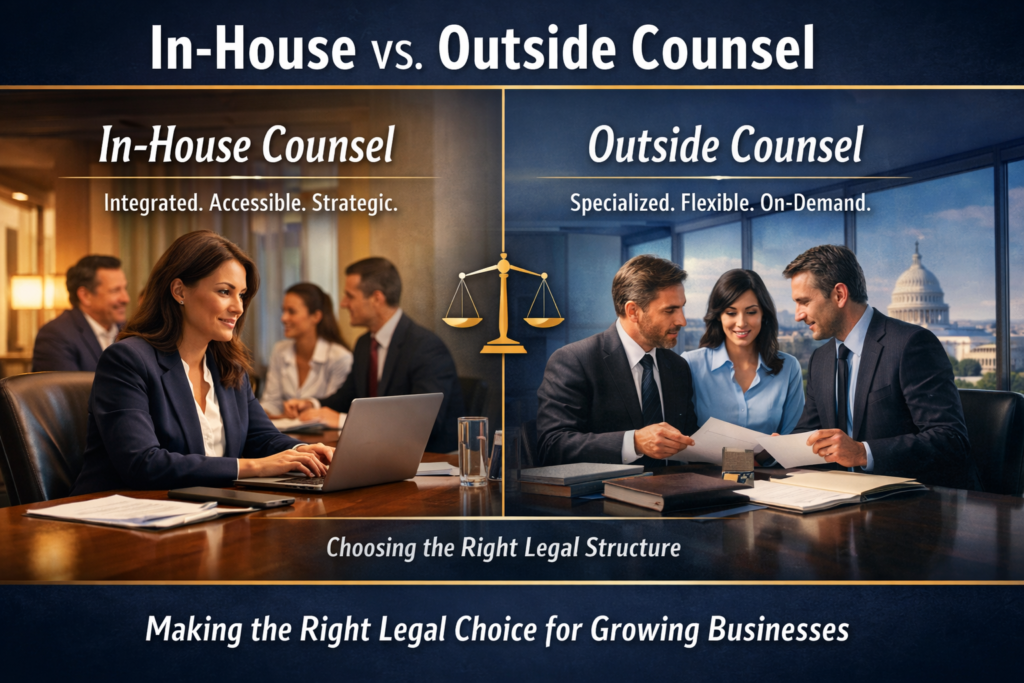
In-house counsel means we have a lawyer working inside the company as an employee… someone who is part of the team every day. They attend meetings. They see how decisions are made… not just the final result. And honestly, that accessibility changes everything.
We save so much time this way… no waiting, no long explanations. They already understand our business, so conversations feel easier and quicker. They know our risk tolerance. They know our goals. They know how we operate when things get messy… and they will. That familiarity saves time. It also prevents mistakes.
But there is a cost side to this. According to the U.S. Bureau of Labor Statistics, the median annual salary for lawyers is well into six figures. And that is just salary. When we add benefits, bonuses, and overhead, the real cost becomes much higher. For companies with steady legal work every week… contracts, compliance, employment questions… it can make sense. The workload justifies the investment.
For others, it may feel like too much, too soon.
What Is Outside Counsel?
Outside counsel means hiring a law firm when we need them. They are not employees. They are partners we bring in for specific situations.
This model gives flexibility… which many growing companies need.
If legal work slows down, costs slow down too. There is no fixed salary sitting there. We pay for what we use.
Another big advantage is specialization. Law firms usually have entire teams focused on different areas… corporate transactions, litigation, regulatory issues, international matters. That level of expertise is hard to match with one single in-house lawyer.
Of course, hourly fees can add up. A complex deal or dispute can become expensive faster than we expect. We have all seen that moment when the invoice arrives… and it is higher than we hoped. But the reality is, we are paying for focused legal expertise when we need it. For growing businesses, this approach often makes the most sense.
The Cost Reality No One Likes Talking About
This is where the conversation becomes real. In-house counsel gives predictable monthly costs… but it is a fixed commitment. Outside counsel gives flexibility… but costs can vary from month to month.
Research from the Association of Corporate Counsel shows that many mid-sized companies eventually adopt a hybrid model. Not fully in-house. Not fully external. Something in between.
And honestly… that makes sense. Legal needs rarely stay the same forever.
The Hybrid Approach… What Many Companies Actually Do
We have seen this pattern again and again. Companies start with outside counsel. It works well in the beginning. Then legal questions become more frequent. Response time becomes more important. So they hire one in-house lawyer.
That person handles everyday matters… contracts, internal policies, quick reviews. But for specialized issues like acquisitions, disputes or cross-border work, they still rely on external firms.
This balance works well. It controls cost while still providing deep expertise when needed. It also prevents small issues from turning into big ones… which happens more often than we like to admit.
So… What Is the Right Choice?
There is no universal answer. And honestly… that is okay. A startup handling occasional agreements probably does not need full-time counsel yet. A larger company dealing with constant regulatory issues probably does. The real question is alignment. Does the legal structure support how the business actually operates? Does it help decisions move faster… or slow them down? Because legal support is not just about solving problems. It is about preventing them before they even appear. That is where the real value sits.
At Rock‑Hurst Astor PLLC, we work with businesses facing this exact decision. Some rely fully on outside counsel. Others build hybrid models as they grow. The goal is always the same… creating legal support that fits the business naturally. From contracts and governance to complex international matters, the right structure brings clarity. And clarity brings confidence.
When legal support is aligned properly, it quietly strengthens every decision we make… even the ones no one else sees.