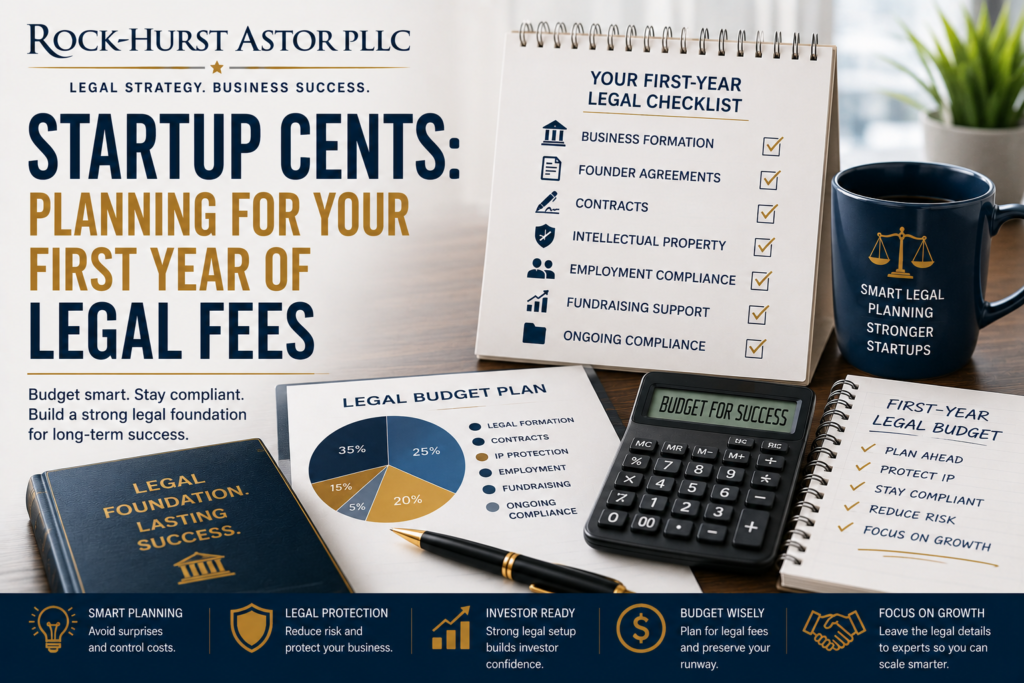
Launching a startup involves more than developing a great product or securing your first customers. From choosing the right business structure to protecting intellectual property and complying with regulations, legal decisions made during your first year can significantly impact your company’s long-term success.
While many founders budget carefully for marketing, hiring, and technology, they often underestimate legal expenses. As a result, unexpected legal costs can strain cash flow and delay growth.
The good news is that with thoughtful planning, startups can manage legal expenses effectively while building a strong legal foundation. In this guide, we’ll explore the common legal costs startups face during their first year and provide practical budgeting tips to help founders prepare for success.
Why Legal Budgeting Matters
Legal services are an investment—not simply an expense.
Proper legal planning helps startups:
- Avoid costly disputes
- Protect intellectual property
- Attract investors
- Comply with state and federal laws
- Build credibility with customers and partners
- Reduce long-term business risk
Ignoring legal needs early often leads to much larger expenses later, especially when issues arise during fundraising, acquisitions, or litigation.
Business Formation Costs
One of the first legal expenses every startup encounters is business formation.
Depending on your goals, you may establish your business as:
- Limited Liability Company (LLC)
- C Corporation
- S Corporation
- Partnership
Many venture-backed startups choose a Delaware C Corporation because it offers governance structures preferred by investors.
Formation costs typically include:
- State filing fees
- Registered agent services
- Organizational documents
- Employer Identification Number (EIN) registration
- Founder agreements
Although filing fees vary by state, professional legal guidance helps ensure your company is structured correctly from the beginning.
Founder Agreements
Even startups founded by close friends should have written agreements.
Key documents include:
- Founder ownership agreements
- Vesting schedules
- Decision-making authority
- Intellectual property assignments
- Confidentiality obligations
Clearly documenting these issues early helps prevent misunderstandings that could discourage future investors.
Contract Drafting and Review
Nearly every startup enters into contracts during its first year.
Common agreements include:
- Customer contracts
- Vendor agreements
- Service agreements
- Independent contractor agreements
- Employment offer letters
- Non-disclosure agreements (NDAs)
- Software licensing agreements
Poorly drafted contracts can create unnecessary legal exposure. Having an attorney review important agreements helps reduce future disputes and protect your business interests.
Intellectual Property Protection
For many startups, intellectual property (IP) is one of the company’s most valuable assets.
Depending on your business, legal costs may include:
- Trademark registration
- Copyright filings
- Patent applications
- Trade secret protection
- Brand protection strategies
- IP ownership documentation
Investors frequently review IP ownership during due diligence, making proper documentation essential for fundraising.
Employment and HR Compliance
Hiring employees creates additional legal responsibilities.
Startup legal costs may include:
- Employment agreements
- Employee handbooks
- Workplace policies
- Non-compete and confidentiality agreements (where permitted by law)
- Wage and hour compliance
- Employee classification guidance
Addressing employment issues early helps reduce compliance risks as your team grows.
Regulatory Compliance
Every industry has unique legal requirements.
Depending on your business model, you may need guidance regarding:
- Consumer protection laws
- Privacy regulations
- Data security
- Industry licensing
- Advertising compliance
- Tax registrations
Ignoring regulatory obligations can result in penalties, fines, or operational delays.
Fundraising Legal Expenses
If your startup plans to raise outside capital during its first year, additional legal costs should be included in your budget.
Typical fundraising legal services include:
- SAFE agreements
- Convertible notes
- Term sheet review
- Venture capital financing documents
- Securities law compliance
- Cap table management
- Board resolutions
- Investor due diligence support
Professional legal guidance during fundraising often helps founders negotiate stronger terms while avoiding expensive mistakes.
Ongoing Corporate Maintenance
Legal work doesn’t end after formation.
Most startups require ongoing legal support for:
- Annual reports
- Board meetings
- Corporate recordkeeping
- Shareholder approvals
- Cap table updates
- Business licenses
- Contract reviews
- Compliance monitoring
Routine legal maintenance keeps your business organized and investor-ready.
How Much Should Startups Budget?
Every startup is different, but legal costs often depend on:
- Industry
- Number of founders
- Hiring plans
- Intellectual property needs
- Fundraising goals
- Regulatory complexity
A practical first-year legal budget may look like this:
| Legal Service | Estimated Cost |
|---|---|
| Business Formation | $1,000–$3,000 |
| Founder Agreements | $500–$2,000 |
| Contract Drafting & Review | $1,000–$5,000 |
| Trademark Registration | $750–$2,500+ |
| Employment Documents | $500–$3,000 |
| Fundraising Legal Support | $5,000–$25,000+ |
| Ongoing General Counsel | Varies by business needs |
These estimates vary depending on complexity, location, and the experience of your legal counsel.
Tips for Managing Startup Legal Costs
Legal expenses don’t have to overwhelm your budget. Consider these strategies:
Prioritize Essential Legal Services
Address high-risk issues first, such as business formation, contracts, and intellectual property.
Work with Startup-Focused Attorneys
Lawyers experienced in startup law understand the challenges early-stage companies face and can often provide practical, cost-effective guidance.
Ask About Fixed-Fee Services
Many law firms offer predictable pricing for routine startup services, making budgeting easier.
Stay Organized
Keeping contracts, corporate records, and financial documents organized reduces attorney time and legal expenses.
Build Legal Costs into Your Financial Plan
Instead of treating legal services as unexpected expenses, include them in your annual operating budget.
The Long-Term Value of Legal Planning
Some founders delay hiring legal counsel to save money.
Unfortunately, small legal problems can quickly become expensive disputes involving:
- Founder disagreements
- Contract breaches
- Intellectual property conflicts
- Employment claims
- Investor concerns
- Regulatory investigations
Investing in legal guidance during your first year often prevents far greater costs in the future.
How Rock-Hurst Astor PLLC Helps Startups
At Rock-Hurst Astor PLLC, we work with startups and entrepreneurs from formation through growth and investment.
Our legal services include:
- Business formation
- Founder agreements
- Corporate governance
- Commercial contracts
- Trademark and intellectual property guidance
- Venture capital financing
- SAFE and convertible note agreements
- Employment counseling
- Regulatory compliance
- Outside general counsel services
We help founders build strong legal foundations so they can focus on growing their businesses with confidence.
Final Thoughts
Your startup’s first year is filled with important decisions, and legal planning should be one of them. By budgeting for business formation, contracts, intellectual property, employment compliance, and fundraising support, founders can avoid costly surprises and position their companies for sustainable growth.
Rather than viewing legal services as an unavoidable expense, consider them an investment in your company’s future. A proactive legal strategy can protect your business, strengthen investor confidence, and create the foundation needed for long-term success.