Launching a startup is an exciting journey, but it also comes with legal responsibilities that can significantly impact your company’s future. From choosing the right business structure to negotiating investor agreements and protecting intellectual property, legal guidance is essential at every stage of growth. One of the most common questions entrepreneurs ask is:
How much does a startup lawyer cost?
The answer depends on several factors, including your startup’s stage, legal needs, billing arrangements, and the attorney’s experience. While hiring a lawyer may seem like a significant expense, experienced legal counsel can help founders avoid costly mistakes that could jeopardize fundraising, partnerships, or long-term growth.
In this guide, we’ll break down startup lawyer costs in 2026, explain common pricing models, and share practical tips for budgeting your legal expenses.
Why Startups Need a Lawyer
Many founders try to handle legal matters themselves to save money. However, startups often face complex legal issues that require professional guidance.
A startup lawyer can assist with:
- Business formation
- Founder agreements
- Shareholder agreements
- Commercial contracts
- Intellectual property protection
- Employment law
- Venture capital financing
- Securities compliance
- Corporate governance
- Mergers and acquisitions
Working with legal counsel early helps reduce risk and creates a solid legal foundation for future growth.
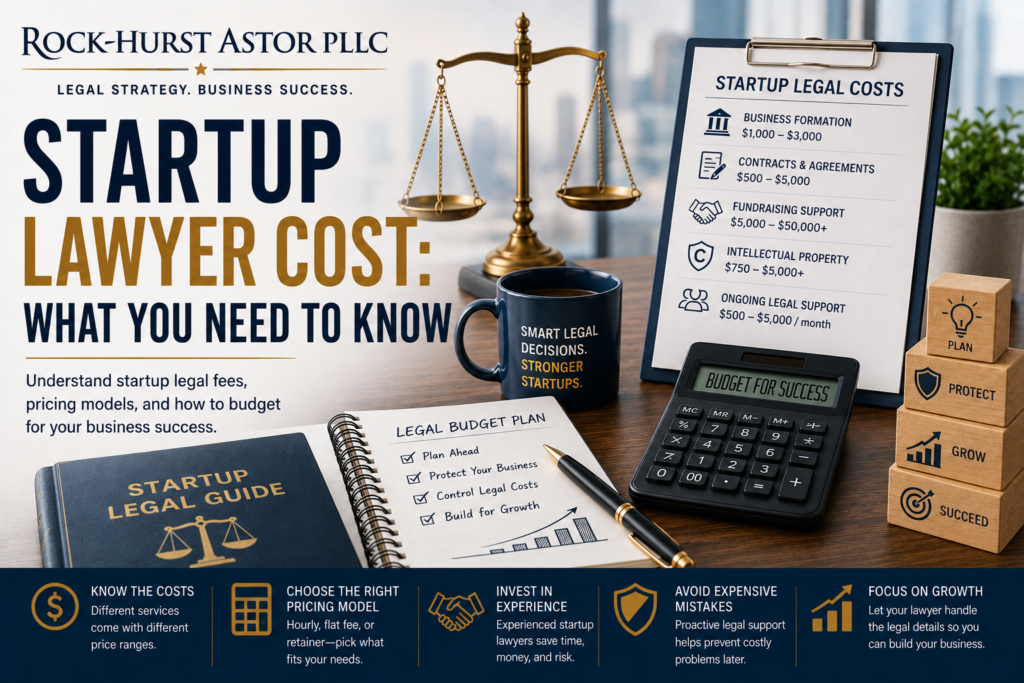
How Much Does a Startup Lawyer Cost?
Startup legal costs vary depending on the complexity of the work and the attorney’s billing structure.
Here are some common pricing ranges:
| Legal Service | Estimated Cost |
|---|---|
| Business Formation | $1,000–$3,000 |
| Founder Agreements | $500–$2,500 |
| Trademark Registration | $750–$2,500+ |
| Contract Drafting & Review | $500–$5,000 |
| SAFE or Convertible Note Financing | $2,000–$10,000 |
| Seed Funding Round | $5,000–$15,000 |
| Series A Financing | $15,000–$50,000+ |
| Outside General Counsel | Monthly retainer or hourly |
Actual legal fees depend on the scope of services, transaction complexity, and the law firm’s experience.
Common Billing Methods
Startup attorneys typically use one of several billing models.
Hourly Billing
Many law firms charge by the hour.
Typical hourly rates include:
- Junior Attorney: $150–$300/hour
- Experienced Business Lawyer: $300–$600/hour
- Senior Partner: $600–$1,000+/hour
Hourly billing is often used for:
- Contract negotiations
- Legal advice
- Corporate transactions
- Litigation
- Complex financing matters
Flat Fees
Many startup lawyers offer predictable flat-fee pricing for routine legal services.
Examples include:
- LLC or Corporation formation
- Trademark filings
- NDAs
- Founder agreements
- Basic contract packages
Flat fees help founders budget legal expenses more accurately.
Monthly Retainers
Growing startups often retain legal counsel for ongoing support.
Retainer arrangements may cover:
- General legal advice
- Contract review
- Employment issues
- Corporate governance
- Compliance questions
Monthly retainers provide predictable costs while ensuring quick access to legal guidance.
Factors That Affect Startup Lawyer Costs
Several variables influence what you’ll pay for legal services.
Stage of Your Startup
An early-stage startup usually has simpler legal needs than a venture-backed company preparing for institutional financing.
As your business grows, legal requirements become more complex.
Business Structure
Forming a Delaware C Corporation for venture capital financing generally requires more legal work than forming a single-member LLC.
The structure you choose directly impacts legal costs.
Fundraising Activity
Raising outside capital significantly increases legal expenses.
Attorneys help with:
- Term sheet negotiations
- SAFE agreements
- Convertible notes
- Preferred stock financing
- Securities law compliance
- Investor due diligence
Professional legal guidance is particularly valuable during fundraising because financing documents often affect founder ownership and future investment rounds.
Intellectual Property
Technology companies and innovative startups often require additional legal services for:
- Trademark registration
- Copyright protection
- Patent strategy
- Intellectual property assignments
- Licensing agreements
Protecting intellectual property early can increase your company’s value and attract investors.
Employment Growth
Hiring employees creates additional legal obligations.
Legal costs may include:
- Employment agreements
- Independent contractor agreements
- Employee handbooks
- Confidentiality agreements
- Equity compensation plans
- HR compliance
Is Hiring a Startup Lawyer Worth the Cost?
For most founders, the answer is yes.
A startup lawyer helps reduce legal risk by:
- Structuring your business correctly
- Protecting founder ownership
- Drafting enforceable contracts
- Preventing regulatory issues
- Supporting fundraising efforts
- Protecting intellectual property
- Avoiding costly disputes
The cost of fixing legal mistakes later is often far greater than the cost of obtaining legal advice early.
How to Reduce Startup Legal Costs
Legal services are an investment, but there are ways to manage expenses.
Plan Ahead
Don’t wait until legal problems arise.
Early planning often reduces costs and avoids emergency legal work.
Stay Organized
Provide attorneys with complete documentation to minimize billable time.
Maintain organized records for:
- Corporate documents
- Contracts
- Financial statements
- Cap tables
Use Flat-Fee Services When Available
Routine legal work is often available at predictable flat rates.
Ask your attorney whether fixed-fee packages are available.
Prioritize High-Impact Legal Work
Focus first on services that protect your business, including:
- Business formation
- Founder agreements
- Intellectual property
- Commercial contracts
Additional legal services can often be added as your company grows.
Build Legal Expenses into Your Budget
Legal costs shouldn’t be treated as unexpected expenses.
Include them in your annual financial plan alongside payroll, marketing, and technology investments.
Why Experienced Startup Counsel Matters
Not every attorney specializes in startup law.
Startup-focused lawyers understand issues such as:
- Venture capital financing
- Founder equity
- Stock option plans
- SAFE agreements
- Convertible notes
- Delaware corporate law
- Investor negotiations
Their experience can help founders avoid unfavorable deal terms and prepare for future fundraising rounds.
How Rock-Hurst Astor PLLC Helps Startups
At Rock-Hurst Astor PLLC, we help entrepreneurs navigate the legal challenges of launching and growing successful businesses.
Our startup legal services include:
- Business formation
- Founder and shareholder agreements
- Commercial contracts
- Venture capital and seed financing
- SAFE and convertible note transactions
- Intellectual property guidance
- Corporate governance
- Employment counseling
- Regulatory compliance
- Outside general counsel services
We work closely with founders to deliver practical legal solutions that support sustainable business growth while helping manage legal costs effectively.
Final Thoughts
Hiring a startup lawyer is one of the smartest investments an entrepreneur can make. While legal costs vary depending on your business stage and specific needs, proactive legal planning helps protect your company, strengthen investor confidence, and reduce the risk of expensive disputes.
Whether you’re forming a new company, negotiating your first funding round, or preparing for rapid growth, experienced legal counsel can provide the guidance needed to make informed decisions and build a strong foundation for long-term success. By budgeting for legal services from the beginning, founders can focus on innovation and growth with greater confidence.