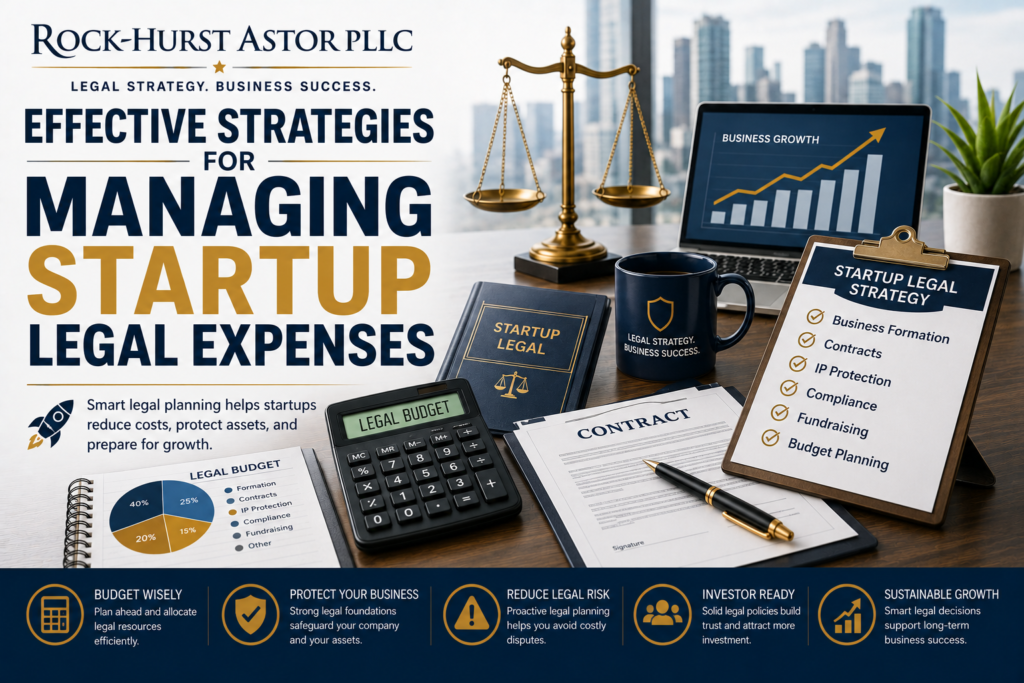
Starting a business is an exciting milestone, but it also comes with legal responsibilities that every founder must address. From business formation and contracts to intellectual property protection and fundraising, legal expenses can add up quickly—especially during the early stages of growth. While legal services are essential, startups can take proactive steps to manage costs without compromising the quality of legal support.
The key is not to eliminate legal expenses but to budget wisely, prioritize high-value legal services, and work efficiently with experienced startup counsel. In this guide, we’ll explore practical strategies for managing startup legal expenses while protecting your business and positioning it for long-term success.
Why Managing Legal Expenses Matters
Many startups operate with limited budgets, making every dollar count. However, delaying or avoiding legal work often results in larger costs later. Poorly drafted contracts, founder disputes, compliance issues, or intellectual property conflicts can be far more expensive than preventive legal advice.
A well-planned legal strategy helps startups:
- Reduce business risk
- Protect company assets
- Improve investor confidence
- Avoid costly litigation
- Stay compliant with applicable laws
- Support sustainable growth
Rather than viewing legal services as an unavoidable expense, successful founders treat them as an investment in the future of the business.
1. Build a Legal Budget Early
One of the most effective ways to manage legal expenses is to include them in your business plan from day one.
A startup legal budget should account for:
- Business formation
- Founder agreements
- Commercial contracts
- Intellectual property protection
- Employment documentation
- Regulatory compliance
- Fundraising legal support
- Ongoing corporate maintenance
Planning ahead helps eliminate surprises and ensures legal costs don’t disrupt cash flow during critical growth stages.
2. Prioritize Essential Legal Services
Not every legal task needs immediate attention.
Focus first on services that protect your business and reduce long-term risk, including:
- Business entity formation
- Founder and shareholder agreements
- Customer and vendor contracts
- Trademark registration
- Intellectual property assignments
- Confidentiality agreements
As your company grows, additional legal services can be added based on business needs and available resources.
3. Choose the Right Business Structure
Selecting the appropriate legal entity at the beginning can help avoid expensive restructuring later.
Common startup structures include:
- Limited Liability Company (LLC)
- C Corporation
- S Corporation
For startups seeking venture capital funding, a Delaware C Corporation is often the preferred structure because it aligns with investor expectations and corporate governance standards.
Consulting an experienced startup attorney before choosing a business structure can prevent unnecessary legal costs in the future.
4. Use Flat-Fee Legal Services When Available
Many law firms offer fixed-fee pricing for routine startup legal work.
Flat-fee services often include:
- Business formation
- Founder agreements
- Trademark applications
- Non-disclosure agreements (NDAs)
- Basic contract packages
Predictable pricing makes budgeting easier and eliminates uncertainty about legal costs.
5. Stay Organized
Attorney time is valuable. The more organized your records are, the less time your lawyer spends searching for information.
Maintain organized copies of:
- Corporate documents
- Contracts
- Financial records
- Cap tables
- Employment agreements
- Intellectual property documentation
- Board resolutions
Providing complete and organized information reduces billable hours while improving efficiency.
6. Standardize Common Legal Documents
Many startups repeatedly use similar legal agreements.
Examples include:
- Non-disclosure agreements
- Independent contractor agreements
- Customer service agreements
- Vendor contracts
- Employment offer letters
Working with your attorney to create standardized templates helps reduce future drafting costs while maintaining legal consistency.
7. Protect Intellectual Property Early
Delaying intellectual property protection can create significant legal and financial problems.
Startups should consider protecting:
- Company names
- Logos
- Trademarks
- Software ownership
- Copyrights
- Trade secrets
Investors frequently review intellectual property ownership during due diligence. Addressing these issues early reduces legal complications during future fundraising.
8. Communicate Efficiently with Your Attorney
Efficient communication can significantly reduce legal expenses.
Before contacting your lawyer:
- Organize your questions.
- Combine multiple issues into one meeting.
- Provide supporting documents in advance.
- Clearly explain your objectives.
Well-prepared discussions reduce unnecessary billable time and help attorneys provide faster, more effective advice.
9. Plan Ahead for Fundraising
Fundraising often represents one of the largest legal expenses for startups.
Typical legal work includes:
- SAFE agreements
- Convertible notes
- Preferred stock financing
- Term sheet negotiations
- Securities law compliance
- Investor due diligence
- Cap table management
Planning for these costs before approaching investors allows founders to negotiate financing from a stronger position while avoiding unexpected expenses.
10. Consider Ongoing Outside General Counsel
Instead of hiring lawyers only when problems arise, many growing startups work with outside general counsel.
This arrangement provides ongoing legal support for:
- Contract review
- Employment questions
- Corporate governance
- Regulatory compliance
- Commercial transactions
- Strategic legal advice
Ongoing legal guidance often prevents small issues from becoming expensive legal disputes.
Common Startup Legal Expenses
While every business has different legal needs, founders should generally budget for:
| Legal Service | Typical Cost Range |
|---|---|
| Business Formation | $1,000–$3,000 |
| Founder Agreements | $500–$2,500 |
| Contract Drafting & Review | $500–$5,000 |
| Trademark Registration | $750–$2,500+ |
| Employment Documents | $500–$3,000 |
| Fundraising Legal Support | $5,000–$25,000+ |
| Outside General Counsel | Varies by scope and billing arrangement |
Actual costs depend on the complexity of the work, the attorney’s experience, and your startup’s stage of growth.
Mistakes That Increase Legal Costs
Many founders unintentionally create larger legal bills by making avoidable mistakes.
Common examples include:
- Waiting until problems become urgent
- Using generic online legal templates
- Failing to document founder ownership
- Ignoring intellectual property protection
- Signing investor documents without legal review
- Mixing personal and business finances
- Delaying compliance obligations
Preventive legal planning is almost always less expensive than resolving legal disputes after they arise.
How Rock-Hurst Astor PLLC Helps Startups Control Legal Costs
At Rock-Hurst Astor PLLC, we understand that startups must carefully balance growth with financial discipline. Our attorneys work closely with entrepreneurs to provide practical, cost-effective legal guidance tailored to each stage of the business lifecycle.
Our startup legal services include:
- Business formation
- Founder and shareholder agreements
- Commercial contracts
- Intellectual property guidance
- Venture capital and seed financing
- SAFE and convertible note transactions
- Employment counseling
- Corporate governance
- Regulatory compliance
- Outside general counsel services
We focus on delivering strategic legal solutions that help founders manage legal expenses while building strong, investor-ready businesses.
Final Thoughts
Managing startup legal expenses isn’t about cutting corners—it’s about making smart decisions that protect your company while maximizing the value of every dollar spent. By creating a legal budget, prioritizing essential services, organizing documentation, protecting intellectual property early, and partnering with experienced startup counsel, founders can reduce unnecessary costs and avoid expensive legal issues down the road.
A proactive legal strategy provides more than compliance—it creates a solid foundation for fundraising, customer trust, operational stability, and long-term growth. For startups, investing in the right legal guidance today can prevent significant financial and operational challenges tomorrow.