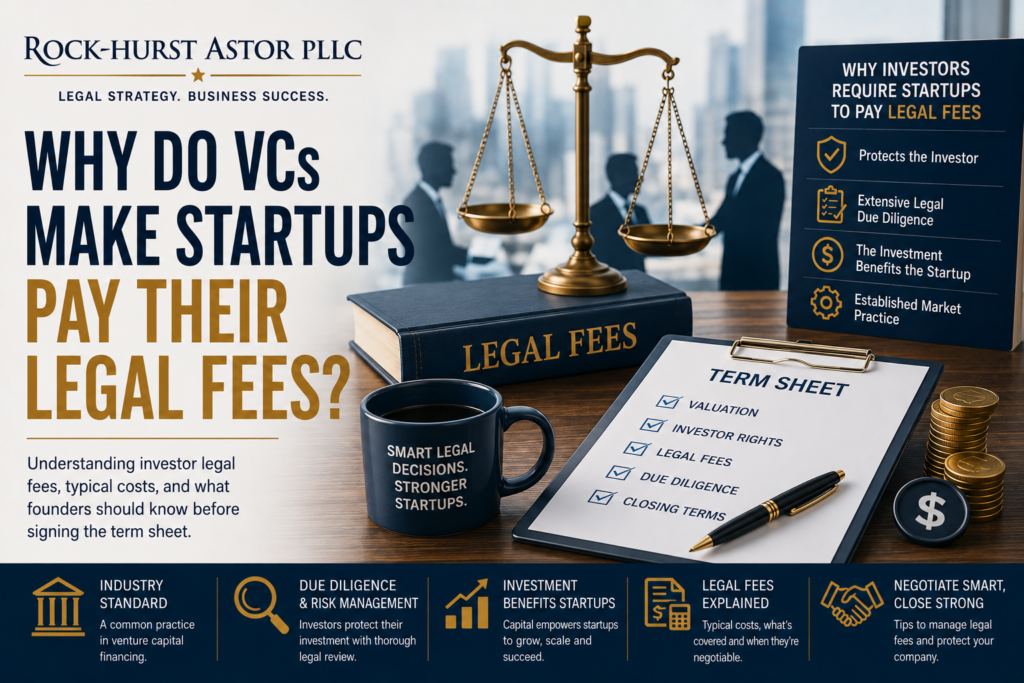
When startups secure venture capital funding, founders often celebrate signing a term sheet and moving closer to closing the investment. However, many are surprised to discover an additional expense hidden in the financing documents: the startup is expected to pay the investor’s legal fees.
For first-time founders, this can seem unfair. Why should a startup pay for lawyers representing the investor?
The answer lies in long-established venture capital practices, transaction efficiency, and risk management. Understanding why venture capital (VC) firms require startups to cover legal expenses can help founders negotiate funding agreements more effectively and avoid unexpected costs.
In this guide, we’ll explain why investor legal fees are common, how much they typically cost, when they may be negotiable, and how experienced startup counsel can help protect your interests.
What Are VC Legal Fees?
During a venture capital financing round, both the startup and the investor hire attorneys.
Typically:
- The startup hires corporate counsel to prepare financing documents.
- The VC hires its own legal team to review the transaction, conduct due diligence, negotiate investment terms, and ensure the investment complies with applicable laws.
Although each party has separate legal representation, it is common market practice for the startup—not the investor—to reimburse the VC’s legal expenses at closing.
These costs are usually outlined in the term sheet before definitive agreements are drafted.
Why Do Venture Capital Firms Require Startups to Pay?
There are several practical reasons behind this long-standing practice.
1. It’s an Established Market Standard
In venture capital transactions, investor legal fee reimbursement has become a standard provision, particularly in institutional financing rounds.
Many venture capital firms include language stating that the company will reimburse reasonable legal expenses regardless of which law firm the investor retains.
Because this practice is widely accepted, founders often agree to it without extensive negotiation.
2. Investors Conduct Extensive Due Diligence
Before investing hundreds of thousands—or even millions—of dollars, venture capital firms perform comprehensive legal due diligence.
Investor attorneys review:
- Corporate formation documents
- Capitalization tables
- Stock option plans
- Intellectual property ownership
- Commercial contracts
- Employment agreements
- Regulatory compliance
- Litigation history
- Data privacy practices
This process protects investors from hidden legal risks that could affect the value of their investment.
3. The Investment Primarily Benefits the Startup
Although investors benefit from making successful investments, the funding itself enables the startup to:
- Hire employees
- Build products
- Expand operations
- Increase marketing
- Develop new technology
- Scale faster
Because the company receives the capital, investors generally view legal fee reimbursement as one of the costs associated with obtaining financing.
4. Transaction Efficiency
If every investor paid its own legal expenses, negotiations over reimbursement could become more complicated.
Using a consistent market standard simplifies venture financing and allows transactions to move more efficiently.
Standardized practices reduce friction during negotiations.
How Much Are Investor Legal Fees?
Legal fees vary depending on the complexity of the financing.
Typical estimates include:
| Financing Round | Typical Investor Legal Fees |
|---|---|
| Pre-Seed | $5,000–$10,000 |
| Seed Round | $10,000–$20,000 |
| Series A | $20,000–$50,000+ |
| Later-Stage Financing | $50,000–$150,000+ |
Complex cross-border transactions, acquisitions, or multiple investor syndicates may increase legal costs significantly.
Are VC Legal Fees Negotiable?
Yes—but only to a certain extent.
Experienced startup attorneys often negotiate provisions such as:
Fee Caps
Rather than paying unlimited legal expenses, founders may negotiate a maximum reimbursement amount.
For example:
“The Company shall reimburse Investor legal fees up to $25,000.”
Fee caps provide budgeting certainty while remaining acceptable to many institutional investors.
Reasonable Expenses Only
Founders should ensure reimbursement applies only to reasonable and documented legal expenses.
This prevents excessive billing.
Payment Only If Closing Occurs
Many founders negotiate reimbursement only after the financing successfully closes.
Otherwise, startups could pay substantial legal fees even if the investment never happens.
Shared Legal Costs
Occasionally, multiple investors agree to share legal counsel, reducing overall transaction expenses.
Although less common, this approach can lower startup costs.
What Happens If the Deal Falls Apart?
One issue founders often overlook is whether investor legal fees are owed if the transaction never closes.
The answer depends on the language in the term sheet.
Some agreements require reimbursement regardless of closing.
Others only require payment after funds are successfully invested.
This provision deserves careful review before signing any financing documents.
Hidden Costs Beyond Investor Legal Fees
Investor counsel isn’t the only legal expense associated with raising capital.
Startups should also budget for:
- Company legal counsel
- Delaware filing fees
- Corporate governance updates
- Stock issuance documentation
- Blue Sky filings
- Updated capitalization records
- Intellectual property assignments
- Employment agreements
- Option plan amendments
Together, total legal expenses for a financing round can represent a meaningful portion of the transaction costs.
Why Experienced Startup Counsel Matters
Raising venture capital involves much more than negotiating valuation.
Startup attorneys help founders:
- Review term sheets
- Negotiate investor protections
- Understand liquidation preferences
- Analyze anti-dilution provisions
- Review board governance
- Protect founder ownership
- Negotiate legal fee provisions
- Coordinate financing documents
- Ensure regulatory compliance
Experienced legal counsel often saves founders significantly more than the legal fees they charge by identifying unfavorable terms before they become binding.
Tips for Founders Before Signing a Term Sheet
Before accepting venture capital, consider the following:
Understand Every Cost
Legal expenses are only one component of financing.
Review all expected transaction costs before closing.
Budget Early
Legal fees should be included in fundraising budgets from the beginning.
Unexpected expenses can reduce working capital.
Negotiate Before Definitive Documents
The best opportunity to negotiate legal fee provisions is during the term sheet stage—not after definitive agreements are drafted.
Hire Startup-Focused Counsel
Venture financings contain specialized legal terms that general business attorneys may encounter less frequently.
Working with experienced startup counsel helps ensure your interests remain protected throughout the transaction.
How Rock-Hurst Astor PLLC Helps Startups Navigate Venture Capital Transactions
At Rock-Hurst Astor PLLC, we work with startups, founders, and emerging businesses throughout every stage of the fundraising process.
Our attorneys assist clients with:
- Venture capital financing
- Seed and Series A investments
- SAFE and convertible note financings
- Term sheet negotiations
- Corporate governance
- Founder agreements
- Investor due diligence
- Equity structuring
- Commercial contracts
- Ongoing corporate legal counsel
Our goal is to help founders understand every legal and financial obligation before signing investment documents, allowing them to raise capital with confidence while protecting the long-term interests of their business.
Final Thoughts
Having startups reimburse investor legal fees may seem surprising, but it remains one of the most common practices in venture capital financing. While investors view these expenses as part of the cost of obtaining capital, founders should never assume every fee provision is non-negotiable.
Understanding market standards, budgeting for legal costs, and working with experienced startup counsel can help founders avoid surprises, negotiate more balanced agreements, and focus on building successful businesses after the financing closes.