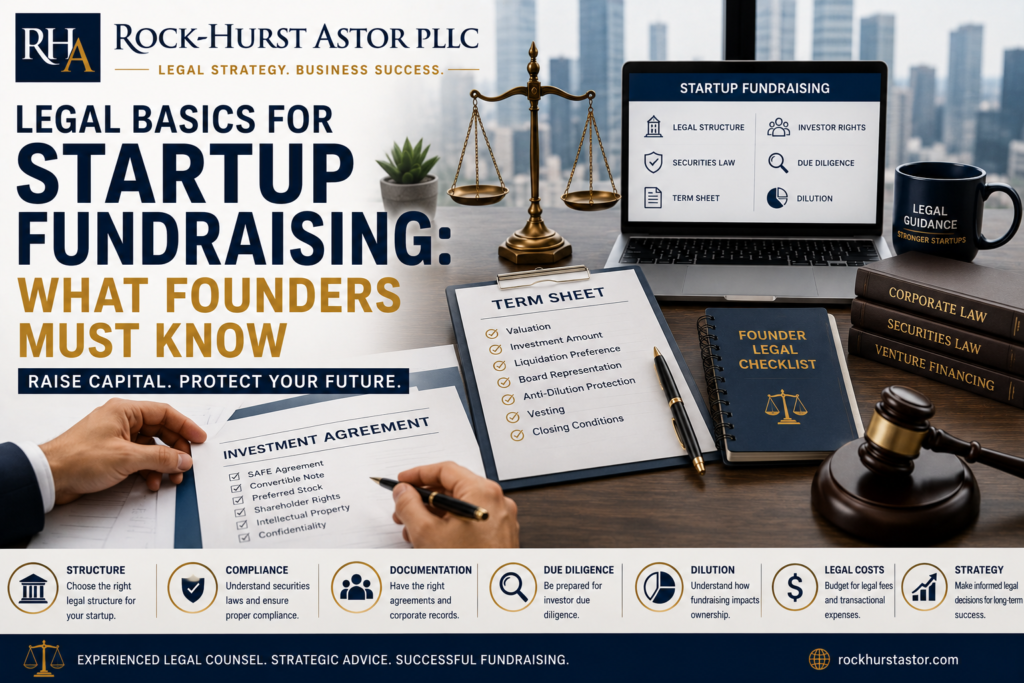
Legal Basics for Startup Fundraising: What Founders Must Know
Raising outside capital can be a major turning point for a startup. Funding can help entrepreneurs hire employees, develop products, expand operations, acquire customers, and pursue ambitious growth plans. But fundraising is not simply a financial transaction. It is also a legal process that can affect ownership, control, governance, and the future value of a company.
For first-time founders, the legal side of fundraising can feel complicated. Terms such as SAFE agreements, convertible notes, preferred stock, securities laws, term sheets, due diligence, and dilution can quickly become overwhelming.
Understanding the legal basics before approaching investors can help founders make better decisions and avoid expensive mistakes. This guide explains some of the most important legal considerations every startup founder should understand before raising capital.
Note: This article provides general educational information and is not a substitute for legal advice. Startup financing laws and requirements can vary depending on the transaction and circumstances.
Why Legal Preparation Matters Before Fundraising
Investors want to know that a startup is legally organized and that its founders have addressed potential risks.
Before investing, an investor may examine:
- The company’s formation documents
- Ownership and capitalization
- Founder agreements
- Intellectual property ownership
- Existing contracts
- Employment arrangements
- Previous financing
- Regulatory compliance
- Pending disputes or liabilities
If important documents are missing or inconsistent, due diligence can become slower and more expensive. In some cases, legal problems can cause an investor to reconsider or delay an investment.
Getting organized before fundraising can therefore make the process more efficient and help demonstrate that the company is prepared for growth.
1. Choose the Right Business Structure
A startup should have an appropriate legal structure before accepting outside investment.
Common structures include LLCs and corporations. While an LLC may be appropriate for some businesses, venture-backed startups frequently use a C corporation, particularly when they anticipate multiple rounds of institutional financing.
The business structure can affect:
- Ownership
- Tax considerations
- Investor participation
- Governance
- Equity issuance
- Future fundraising
Changing an entity structure after fundraising has begun can create additional legal work and complications. Founders should discuss their long-term goals with qualified legal and tax professionals before selecting an entity.
2. Make Sure Founder Ownership Is Documented
Founders should clearly document who owns what before approaching investors.
Founder documentation may address:
- Equity percentages
- Vesting schedules
- Roles and responsibilities
- Decision-making authority
- Intellectual property assignments
- What happens if a founder leaves
A startup with unclear ownership can face significant problems during investor due diligence.
For example, an investor may want confirmation that the individuals claiming ownership actually have enforceable rights to their shares. Resolving ownership disputes at the fundraising stage can delay a transaction and increase legal expenses.
3. Understand Securities Laws
Startup fundraising generally involves the issuance or sale of securities, which means founders need to consider applicable federal and state securities laws.
Depending on the structure of the transaction, startups may need to rely on an available exemption from registration and comply with related requirements.
This is one reason founders should not treat fundraising documents as ordinary contracts.
A startup attorney can help evaluate:
- The proposed financing structure
- Applicable exemptions
- Required disclosures
- Investor eligibility
- Securities filings
- State-law requirements
Compliance should be addressed before accepting investment rather than after the money has been received.
4. Know the Difference Between Common Fundraising Instruments
Founders may encounter several financing structures during early-stage fundraising.
SAFE Agreements
A SAFE, or Simple Agreement for Future Equity, allows an investor to provide capital in exchange for a contractual right to receive equity in a future financing or another specified event.
SAFEs are frequently used for early-stage startup financing because they can be simpler than traditional equity financings.
However, founders should understand how the agreement can affect future ownership and dilution.
Convertible Notes
A convertible note is a form of debt that may convert into equity under specified conditions.
Terms can include:
- Interest
- Maturity date
- Valuation cap
- Discount rate
- Conversion provisions
Founders should understand the financial and legal implications before accepting a convertible note.
Preferred Stock
Larger venture capital financings frequently involve preferred stock.
These transactions can involve more extensive documentation and negotiations concerning:
- Liquidation preferences
- Voting rights
- Conversion rights
- Protective provisions
- Board representation
- Anti-dilution provisions
The legal complexity generally increases as a startup moves toward larger institutional financing rounds.
5. Understand the Term Sheet
A term sheet outlines the key business terms of a proposed investment.
Although some provisions may be non-binding, certain terms can be binding depending on the document and applicable law.
Founders should pay close attention to provisions involving:
- Valuation
- Investment amount
- Ownership
- Liquidation preferences
- Board seats
- Voting rights
- Investor protections
- Founder vesting
- Exclusivity or no-shop provisions
The headline valuation is only one part of the deal. Two investment offers with similar valuations can have very different economic and governance consequences.
A startup lawyer can help founders understand the complete picture before they agree to important terms.
6. Prepare for Investor Due Diligence
Once investors become serious, they may request extensive documentation.
A startup should be prepared to provide materials such as:
- Articles or certificates of incorporation
- Bylaws
- Board and shareholder records
- Cap table
- Founder agreements
- Employee agreements
- IP assignments
- Material contracts
- Financial information
- Prior financing documents
Creating a secure virtual data room can make the process easier.
Founders should also review their records before sharing them. Inconsistencies in ownership, contracts, or corporate documents can create unnecessary questions during due diligence.
7. Protect Intellectual Property Before Raising Capital
Intellectual property is often among a startup’s most important assets.
Founders should make sure the company—not individual founders, employees, or contractors—has appropriate rights to the intellectual property necessary to operate the business.
Relevant assets may include:
- Software
- Trademarks
- Copyrights
- Patents
- Product designs
- Proprietary processes
- Trade secrets
Written IP assignment and confidentiality agreements can help establish ownership and protect sensitive information.
Investors may specifically examine IP ownership as part of due diligence.
8. Understand Dilution
Fundraising generally means issuing equity or rights to receive equity. As a result, founders need to understand dilution.
Dilution occurs when new shares or equity interests are issued, reducing existing shareholders’ percentage ownership.
Founders should consider:
- Current ownership
- New investor ownership
- Employee option pools
- Future financing rounds
- Conversion of SAFEs or notes
A founder may focus on how much money the company is receiving while overlooking how the transaction affects ownership after future financing events.
Understanding the cap table is therefore essential before signing a financing agreement.
9. Review Investor Rights Carefully
Investment agreements can give investors certain rights that affect how the company operates.
Depending on the transaction, investors may receive rights relating to:
- Voting
- Board representation
- Information
- Future financing participation
- Approval of certain corporate actions
- Conversion of preferred stock
These provisions can influence the founders’ ability to make decisions independently.
Legal counsel can help founders understand which rights are being granted and how they may affect future fundraising and governance.
10. Budget for Fundraising Legal Costs
Fundraising itself creates legal expenses.
Depending on the financing, startups may need to budget for:
- Attorney fees
- Corporate filings
- Securities compliance
- Due diligence preparation
- Document review
- Cap table updates
- Investor legal fee reimbursement
Costs can vary substantially based on the financing structure, deal size, complexity, and parties involved.
Founders should discuss fees and scope with their attorney early and ask whether fixed-fee arrangements or clearly defined project scopes are available for certain services.
How Rock-Hurst Astor PLLC Can Help
At Rock-Hurst Astor PLLC, we understand that fundraising involves much more than putting together a pitch deck. Founders need to consider legal structure, ownership, investor rights, securities compliance, and the long-term consequences of financing decisions.
Our business and startup legal services can include:
- Startup formation
- Founder and shareholder agreements
- Corporate governance
- SAFE and convertible note transactions
- Venture capital financing
- Term sheet review and negotiation
- Investor due diligence
- Commercial contracts
- Intellectual property guidance
- Securities compliance
- Outside general counsel services
Working with experienced startup counsel can help founders approach fundraising with greater confidence and a clearer understanding of their obligations.
Final Thoughts
Startup fundraising can provide the capital needed to transform an early-stage idea into a growing company, but the legal terms of that financing can have consequences for years to come.
Before accepting investment, founders should understand their business structure, ownership, securities obligations, financing documents, investor rights, intellectual property position, and potential dilution. Preparing these areas early can make due diligence smoother and reduce the likelihood of costly surprises.
Most importantly, founders should avoid viewing legal counsel as something to call only when a problem occurs. Proactive legal planning can be an important part of a successful fundraising strategy.
With the right preparation and experienced legal guidance, founders can pursue capital while protecting their company’s interests and building a stronger foundation for sustainable growth.